Sleep disorders represent one of the three most common indications for medicinal cannabis prescribing in Australia, alongside chronic pain and mental health conditions.
Despite widespread patient interest and increasing prescription volumes, the clinical evidence base remains heterogeneous, and many prescribers encounter uncertainty when considering cannabinoid-based medicines for patients with sleep complaints.
This article outlines the pharmacological mechanisms relevant to sleep, summarises the current evidence by disorder, and provides a practical framework for patient selection, formulation, and monitoring.
Cannabinoid Pharmacology and Sleep
Cannabinoids exert their effects on sleep primarily through the endocannabinoid system (ECS), which plays a role in regulating circadian rhythm, sleep-wake transitions, and sleep staging.
The two principal receptors include:
- CB1 receptors, concentrated in the central nervous system, modulate neurotransmitter release and influence arousal and slow-wave sleep.
- CB2, more commonly associated with immune and peripheral tissues, which play a secondary role in sleep-related inflammatory modulation.
Of the major cannabinoids, THC is generally considered the primary driver of sedative effects. As a partial CB1/CB2 agonist, it reduces sleep onset latency, increases slow-wave (N3) sleep, and may improve total sleep time at lower therapeutic doses.
THC and REM Sleep: Revisiting the Evidence
The relationship between THC and REM sleep is less predictable than once thought. Early studies using high-dose THC consistently reported REM suppression; however, at lower therapeutic doses, findings are mixed and often show little to no effect. The overall evidence base remains limited.1
A 2026 pilot RCT found that a single oral dose of 10 mg THC / 200 mg CBD reduced REM sleep by an average of 33.9 minutes and delayed REM onset, while participants reported no change in subjective sleep quality or next-day cognitive or driving performance.2
Healthcare professionals should not assume REM suppression is a reliable or dose-independent effect at standard prescribing doses.
Long-term use of THC is associated with tolerance to sleep-promoting effects, and abrupt cessation commonly produces rebound insomnia and REM rebound — a clinically important consideration when planning treatment duration and discontinuation.
CBD does not act directly at CB1/CB2 receptors, instead modulating endocannabinoid tone, TRPV1, and serotonergic pathways. Isolated evidence for CBD on human sleep architecture remains limited and inconsistent, but CBD may attenuate some adverse effects of THC — including anxiety and cognitive impairment — making combination formulations clinically relevant.
Cannabinol (CBN) is frequently cited for sedative properties, but direct human clinical evidence is thin; most attributions trace back to studies on cannabis combinations rather than CBN in isolation, and should be characterised as preliminary.
Terpenes including myrcene, linalool, caryophyllene, and terpinolene have documented sedating or anxiolytic properties and may contribute to sleep effects within whole-plant preparations through the entourage effect.
Their individual clinical contribution remains difficult to quantify. The indica/sativa classification, by contrast, has limited pharmacological validity — cannabinoid ratio and terpene profile are more meaningful clinical determinants of a formulation’s sedating properties.
Evidence by Sleep Disorder
Insomnia
Insomnia is the most commonly prescribed-for sleep condition in Australian medicinal cannabis practice. The evidence base is largely observational, with RCT data beginning to emerge.
Observational studies report that between 39% and 71% of patients experience subjective improvements in sleep quality or related conditions following cannabis initiation, and approximately 39% are able to reduce or discontinue conventional sleep medications.3
This finding may be particularly relevant for patients experiencing unwanted effects from existing pharmacotherapy such as benzodiazepines or Z-drugs.
However, the dissociation between subjective and objective outcomes is an important clinical consideration. The 2026 Suraev pilot RCT found that despite objective reductions in total sleep time and REM duration, patients with insomnia disorder reported no subjective worsening of sleep quality or next-day function.2
This suggests that patient-reported improvement alone may not reflect normalised sleep architecture, and that validated measures — such as the Insomnia Severity Index (ISI) or Pittsburgh Sleep Quality Index (PSQI) — should be used alongside clinical review rather than relying solely on patient reports.
Clinical note: Medicinal cannabis is not a first-line treatment for insomnia. Cognitive Behavioural Therapy for Insomnia (CBT-I) remains the evidence-based standard. Cannabis is most appropriately considered as adjunctive therapy in patients who have not responded adequately to first-line options, or where a comorbid condition — such as chronic pain or PTSD — may also benefit.
Restless Legs Syndrome
RLS is a sensorimotor disorder characterised by an irresistible urge to move the legs, typically worsening at rest and at night. Its pathophysiology involves dopaminergic dysfunction and iron metabolism dysregulation, though it is not fully understood. Standard treatments include dopamine agonists, gabapentinoids, opioids, and iron supplementation, with a subset of patients remaining refractory or intolerant.
Evidence for cannabinoids in RLS is preliminary and largely case-based. Patient reports of remarkable and total remission of symptoms following cannabis use have been described in small case series.4
The proposed mechanism — that chronic cannabis use reduces dopamine synthesis capacity in the striatum, normalising overactive basal ganglia activity — is biologically plausible but unconfirmed in controlled trials.5
It is worth noting that acute THC use may transiently increase dopamine release, while chronic use is associated with reduced dopaminergic activity; the clinical implications of this distinction for RLS management require further investigation. No RCTs have been published in this indication.
Clinical note: Cannabis may be a reasonable consideration for RLS patients who have failed or are intolerant of first-line therapies, but should be positioned as adjunctive and monitored carefully. Prescribers should counsel patients that the evidence is preliminary.
Narcolepsy and Idiopathic Hypersomnia
No clinical trials of cannabinoids for narcolepsy or idiopathic hypersomnia have been published. Preclinical evidence suggests CBD may reduce excessive daytime sleepiness and that THC-mediated REM suppression may parallel the mechanism of sodium oxybate, an established treatment for Type 1 narcolepsy.6
Whether the combination of CBD’s wake-promoting effects and THC’s REM-suppressing effects could be therapeutically harnessed in narcolepsy remains speculative. Medicinal cannabis is not currently supported by evidence for routine use in these conditions and should be approached with caution, ideally within a specialist sleep medicine framework.
Prescribing Framework
Medicinal cannabis for sleep is most appropriately considered in patients with a confirmed sleep disorder diagnosis who have demonstrated inadequate response or intolerance to evidence-based first-line therapies.
Patients with comorbid conditions in which cannabinoids may address multiple symptoms — chronic pain, PTSD, or anxiety — may represent particularly suitable candidates.
Contraindications and cautions include a personal or family history of psychosis or schizophrenia spectrum disorders, current or past cannabis use disorder, pregnancy or breastfeeding, and high-risk occupational requirements such as driving or operating heavy machinery.
Concurrent use of CNS depressants warrants careful risk assessment given additive sedation, and adolescents and young adults should be approached with particular caution given neurodevelopmental risk.
Formulation and Cannabinoid Ratio
Formulation selection should be guided by the patient’s specific sleep complaint. For sleep onset difficulty, faster-acting delivery, such as vaporised dried flower or All-in-One vaporiser, is generally more appropriate.
For sleep maintenance difficulty, longer-acting formulations including pastilles or wafers are preferable. Some patients may benefit from a combination of both.
On cannabinoid ratio, available evidence suggests that equal THC:CBD formulations may produce more favourable sleep outcomes than THC-dominant products, partly because CBD attenuates THC-related anxiety and cognitive effects.7
THC-dominant preparations may be considered where sedation is the primary target and the patient profile supports it. Terpene content, particularly myrcene, linalool, caryophyllene, and terpinolene, may offer complementary sedating effects, though clinical evidence for specific terpene contributions remains limited.
Some suitable Nectar Brands options include:
Cultiva Heritage Dried flower (fast-acting, sleep onset):
- Lazer Fuel — indica, high linalool/caryophyllene/bisabolol, indicated for insomnia
Cultiva Signature Dried flower (fast-acting, sleep onset):
- Bacio Gelato — indica-dominant, myrcene/caryophyllene/humulene, indicated for insomnia
- Jealousy — indica-dominant, gradual sedative onset; useful for patients who need to titrate carefully
- Guava Bomba — indica-dominant, highest terpene content in the Cultiva range (3.3%); well-suited to patients with comorbid chronic pain and insomnia
- Red Velvet — indica-dominant, linalool/farnesene/myrcene, calming evening profile
- Noir Diamant — highest total terpene content in the range (4.7%), strong sedative/anxiolytic profile
Longer-acting Pastilles (sleep maintenance):
- Blüm Rest (pastille and oil) — 2:1:2 THC:CBD:CBN; the only product in the range specifically formulated for sleep
Fast-acting All-in-One Vaporiser:
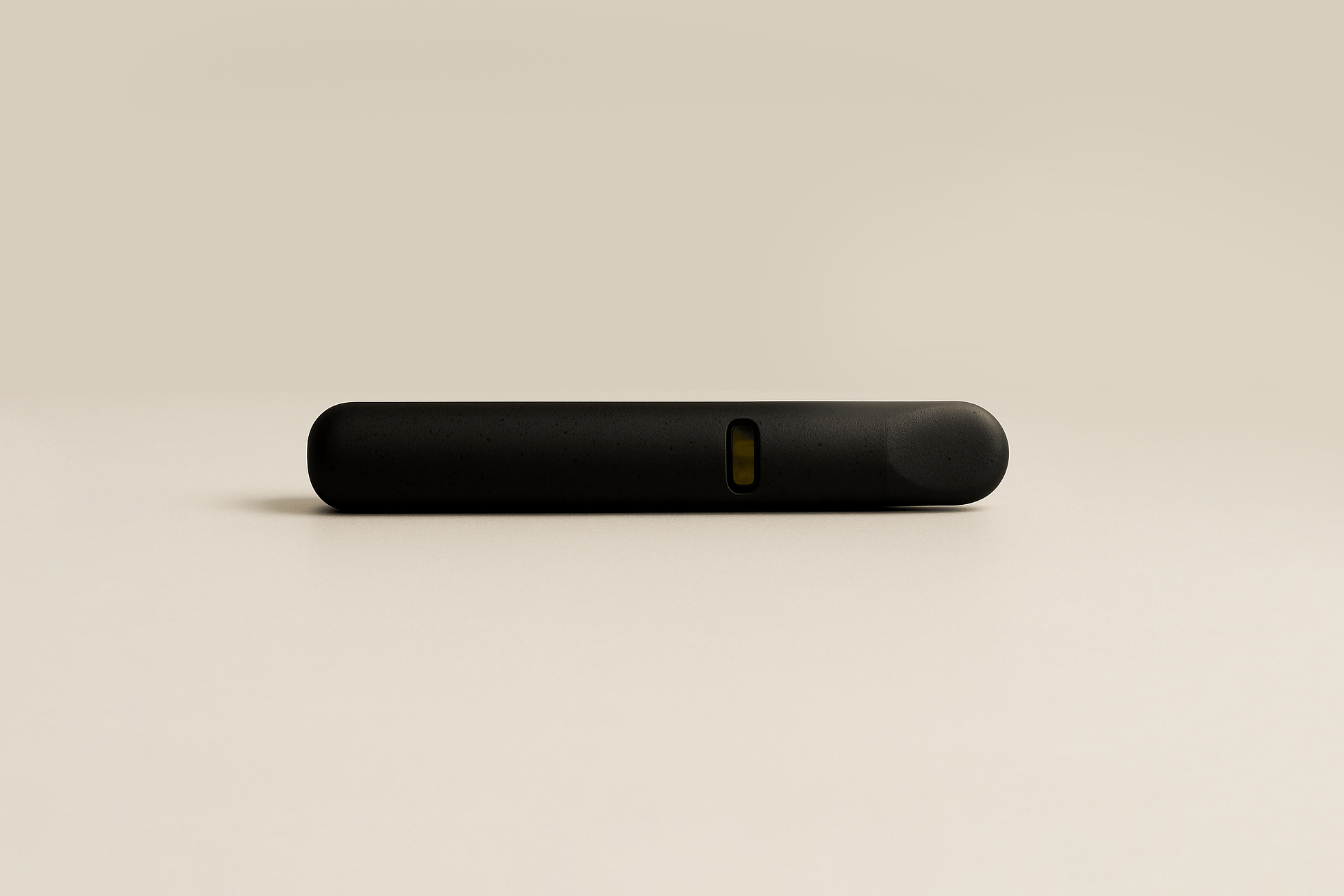
- Cultiva Frosted Oranges Live Resin All-in-One Vaporiser — listed for insomnia but better suited to sleep disturbance driven by comorbid anxiety or pain rather than primary insomnia, given its hybrid profile
Dosing and Titration
A start low, go slow approach is recommended for all patients. Initiate at the lowest practical THC dose, typically 1–2.5 mg, and titrate gradually based on response and tolerability.
Adverse Effects and Monitoring
The most clinically relevant adverse effects in the sleep prescribing context are:
- Next-day sedation and cognitive impairment, particularly with higher THC doses or late-night administration
- Anxiety or paranoia in THC-naive patients
- Tolerance to sleep-promoting effects with long-term use.
Patients should be specifically counselled on withdrawal-associated rebound insomnia and REM rebound if they stop abruptly, and advised not to do so without clinical guidance.
Driving impairment is a critical safety consideration. THC impairs psychomotor function for a variable period beyond subjective intoxication, and patients must be counselled on applicable Australian regulations before initiating treatment.
The Bottom Line
Sleep disorders are among the most common indications for medicinal cannabis in Australia, yet RCT evidence remains limited. Current data support cautious use as adjunctive therapy in patients who have not responded to first-line treatments, particularly where comorbid conditions may also benefit.
Healthcare professionals should be aware that subjective and objective sleep outcomes may diverge, and that patient-reported improvement does not always reflect normalised sleep architecture. Careful patient selection, conservative titration, structured monitoring, and clear therapeutic goals are essential to safe and effective prescribing in this indication.
References
- 1. Chaparro LE, et al. Cannabis and sleep: a systematic review and meta-analysis. Sleep. 2022;45(11):zsac218.
- 2. Suraev A, et al. Acute Effects of Oral Cannabinoids on Sleep and High-Density EEG in Insomnia: A Pilot Randomised Controlled Trial. Journal of Sleep Research. 2026. doi:10.1111/jsr.70124
- 3. Sznitman SR, et al. Medical cannabis and insomnia in older adults with chronic pain: a cross-sectional study. BMJ Support Palliat Care. 2020.
- 4. Ghorayeb I. More evidence of cannabis efficacy in restless legs syndrome. Sleep and Breathing. 2020;24:277–279.
- 5. Bloomfield MAP, et al. Dopaminergic function in cannabis users and its relationship to cannabis-induced psychotic symptoms. Biol Psychiatry. 2014;75(6):470–478.
- 6. Kaul M, Zee PC, Sahni AS. Effects of Cannabinoids on Sleep and their Therapeutic Potential for Sleep Disorders. Neurotherapeutics. 2021;18(1):217–227.
- 7. Vigil JM, et al. Associations between medical cannabis and prescription opioid use in chronic pain patients. PLoS One. 2017.